|
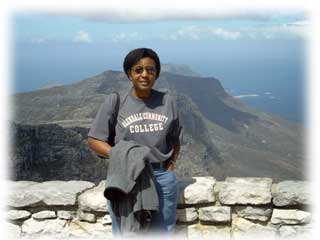
In January 2004, I was able to travel to South Africa with the People to People Ambassador Program's Society for the Psychological Study of Social Issues (SPSSI) delegation. The delegation was comprised of psychologists and psychiatrists interested in learning about how many social issues are studied and addressed in South Africa, and sharing information about how those same issues are addressed in our own countries.
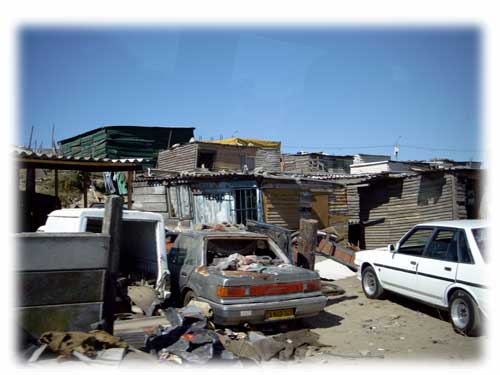
Apartheid has left an indelible mark on the country, and healing the wounds will take time. Because the fall of Apartheid is fairly recent (1993), there are many issues just under the surface. South Africa has an unemployment rate of approximately 30%, and many Blacks in South Africa still live in shanty towns that were previously the only places they were allowed to live in. Though the government has made strides toward helping to right some of the wrongs committed under the Apartheid system, there are many problems with equity concerning land ownership, and the types of jobs the people are able to secure. Partly owing to the unequal educational system that existed for so many years, there is a real problem with having enough well educated, well trained Black people to work in the jobs that are now open to them. Because of this shortage of well trained people, there is still a disparity in employment despite the fact that workplace discrimination based on race is no longer tolerated. This disparity parallels our own situation in the U.S. where we still have this same type of employment inequity, 50 years after separate schools for Blacks and Whites were found to be unconstitutional.
Center for the Study of Violence and Reconciliation
In Johannesburg, we visited the Center for the Study of Violence and Reconciliation (CSVR). The focus of CSVR was victim empowerment. So many people were detained during Apartheid for political reasons and now need to adjust to being free. Many people were sent off to be in the army to fight in other countries, and returned to find things very different from the way they were when they left. Many of the former political detainees, and ex-combatants experience Post Traumatic Stress Disorder, have substance abuse problems, or other issues that require counseling and life skills training, and those services are facilitated by CSVR.
ACTS AIDS Clinic
We also visited the ACTS AIDS, a community-based clinic that offers home-based and palliative care for AIDS patients. Most of the care the clinic provides is in-home treatment, because of the small size of the clinic; however, they do have a small hospice area that can accommodate five patients.
For the population served by this small clinic, the infection rate was 36% of those between 20 and 30 years old. These statistics were further illuminated when Dr. Hardman, who runs the clinic, informed us that she signs three death certificates per day for her own AIDS patients. On a positive note, the rate of AIDS infection seems to be declining in the 15 to 20 year old age group. Staff of the ACTS clinic speculate that educational programs offered in the schools are beginning to work, however much work needs to be done in the area of AIDS education as there are still many myths about how AIDS is spread, and how it can be cured that make it difficult to stop or slow down the spread of the disease.
In many ways, the racial issues in South Africa mirror our own in the U.S., in other ways (the AIDS epidemic) South Africa is very different from the U.S. However there are many things we can learn from them, and that they can learn from us in an effort to improve racial cooperation and equality for all.
|