Ocotillo Spotlight on Instructional Technology
Note: The Ocotillo Spotlight is no longer published, but all previous issues will remain on this site.
spotlight for December 2001
This month the Ocotillo Spotlight is on an overview of E-Learning at Rio Salado College, which has been at the forefront of distance learning since its inception in 1978. Faculty Chair of web technology and innovation Angela Ambrosia discusses the benefits (and challenges) of integrated e-learning systems for both faculty and students based on the Rio experiences.
Doug Sawyer
Ocotillo Faculty Chair
doug.sawyer@scmail.maricopa.edu
Integrated Delivery Systems: The Next Step in E-Learning
written by Linda Miller, Marketing Department, Rio Salado College
linda.miller@riomail.maricopa.edu
You've probably seen the latest statistics: by 2002, approximately three-fourths of U.S. colleges and universities are expected to offer courses delivered through e-learning. Simultaneously, next year more than 50% of the population will be using the Internet.
E-learning takes many forms: from anytime, anyplace courses delivered over the Internet to interactive two-way multi-point audio/video conferencing. According to the Boston E-Learning Association, the
e-learning marketplace represents a potential $770 billion industry when you consider the four primary segments: higher education, adult education or lifelong learning, corporate training, and K-12 education.
So what is important from a faculty member's perspective when it comes to e-learning?
An Integrated System
According to Dr. Angela Ambrosia, the wave of the future is an integrated course delivery system, where students, faculty members and staff can access every piece of data they need with just a few mouse clicks.
"The integrated system gives us an opportunity to have our course content, communication, and features such as the gradebook housed in one system," say Dr. Ambrosia, who serves as faculty chair for web technology and innovation at Rio Salado College. "It also gives faculty members more control over their individual course content.
"The beauty of this system is that changes can be made very easily. Changes occur today...and tomorrow you can capture that data," she says.
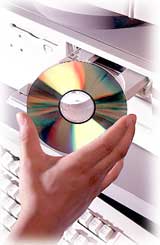
Rio Salado, which has been using various forms of distance learning since 1978, began offering courses online in 1996 (see Rio's History in multimedia format). Although the college has capabilities such as satellite uplink and downlink and desktop delivery, the main e-learning focus at Rio continues to be its expanding roster of courses delivered via the Internet and CD-ROM.
Since the introduction of its first Internet offerings, the college has also focused on ensuring that all major student services could be accessed online. That includes registration, academic advising, counseling, financial aid, an electronic "cybrary," even e-books that can be "checked out" through downloading. In addition, early on Rio Salado implemented a "systems approach." Instead of treating distance learning as a separate entity, the college has integrated the processes it requires throughout all internal departments of the college with the ultimate goal of seamless student service.
Dr. Ambrosia sees an integrated system as "one-stop shopping." For more than two years, Dr. Ambrosia has spearheaded a college pilot , which included partnering with private industry to customize an integrated course management system. A fully implemented integrated system will allow Rio Salado's online students to log on once and be instantly connected to a wealth of resources and value-added features.
Student Features
For instance, in a non integrated system students use one software for instructor communication, but have to visit the college's home page for any student services they required. The integrated system requires one log-on, where students can access course content, the syllabus, daily messages, and even a calendar.
A Real Audio option lets them hear messages from their instructors. Furthermore, hot links are provided for instant connection to the college's helpdesk, cybrary, testing center, student services, and other locations.
An Intracom discussion feature lets students do real-time chats for purposes of reviews and exam preparation. The gradebook lets them monitor their progress by viewing scores for all assignments in one simple place.
"Students love that. It's very motivating," according to Dr. Ambrosia.
And of course, after taking exams in the testing center, students can access their midterm and final exam scores and feedback from the privacy of their personal computer, just as soon as they are graded.
"In our fast-paced society, students expect that. If they can't get it from us, they will go elsewhere," says Dr. Ambrosia.
Faculty and Staff Benefits
Faculty and staff will also benefit from the integrated system, and interface will be greatly expedited among departments that share student information. According to Dr. Ambrosia, the integrated system provides a home page for every faculty member. This page contains icons for every course they teach, plus a message center, calendar, and quick links.
"Some people like to know the weather forecast daily," says Dr. Ambrosia. "I like to know how many Internet students I have each day."
She can learn the exact number after just several clicks, which take her to a specific course icon, and then to that particular updated class roster. The roster also includes user names, start and end dates, and activity reports-all on one easy-to-read screen.
These electronic rosters eliminate the original system of hard copy rosters, which were previously sent to instructors by Admissions and Records every two weeks to keep pace with Rio's policy of 26 start dates a year for Internet courses.
Other frequently used information that is available includes the syllabus, gradebook, and exam content. Instructors can also immediately see how many assignments and exams need to be graded at any one time. A special option allows grading to be done anonymously and objectively by using an identifying number instead of the students' names. The moment the subjective portion of midterm and final exams are graded, the scores can be recorded with A&R.
In addition, instructors can use the integrated system to conduct class surveys. "For example, I might ask my class whether or not a particular graphic enhanced their learning," says Dr. Ambrosia.
The tedious staff process of sending out student letters is also greatly expedited with the integrated system. For example, letters are often sent to inform students of their status or to provide details in advance of class start dates.
Lessons Learned
Customizing the integrated system is a continuous process, and Dr. Ambrosia offers some advice for other colleges that are considering how to successfully implement their own system. "You should ask yourselves, 'How will the system work for us and our students,' rather than "What system should we choose?' " she says.
She also stresses the need to pay constant attention to three steps in the change management process.
"First, there is the need for 'endings.' You need to let go and say goodbye to what you have been doing. Then you need to understand that some chaos is a natural part of the J curve of change. And finally, you will be ready for 'beginnings.' This is the step where you will listen, learn, collaborate, and innovate," Dr. Ambrosia concludes.
|