|
The Maricopa Institute for Learning (MIL) provides a wonderful opportunity for residential faculty to become part of a Fellowship of peers dedicated to the scholarship of teaching and learning (SoTL). In this program, faculty are able to devote their time and resources to conducting applied research in their classrooms and building knowledge through community. Fellows dialogue with one another regularly about enhancing student success, offering each other support, input, and advice. As a result of participating in this program, faculty also share their insights with their peers across the district via articles, dialogue, and reflection.
As MIL continues to evolve, the participants in the program have gradually discovered eight elements that support the MIL's continuing success: merit-based nomination, release time, reflective practice, community building, faculty voices, continuous evaluation, administrative support, and an advocate for the program. The following briefly describes the impact of each element on SoTL.
Merit-Based Nomination and Selection
The selection process for the MIL program begins when a faculty member is nominated by his or her college president, dean, or faculty developer. Nominated faculty propose an empirical study, which is reviewed in a double-blind, merit-based selection process. Proposals are selected based on quality and their potential contribution to SoTL. Maintaining this process ensures that the program remains fair, objective, and recruits people who can clearly communicate their enthusiasm for growing through SoTL.
Release Time
Once they have been selected, MIL Fellows need time to focus on their project. Because faculty often lead harried lives with commitments to family, community, and their profession, time is the one thing that is hard to come by. The MIL addresses this need by providing each fellow six hours of teaching release per semester. With the gift of time provided by the MIL, Fellows gain the opportunity to participate in scholarly research, reflection, and dialogue about effective SoTL practices.
Reflective Practice
The key to deepening a fellow's understanding of SoTL is reflective practice, and it is an essential aspect of the MIL Fellowship. Fellows may engage in reflective practice in their own unique ways, but their reflection shares a common goal: to better understand the relationship between teaching and learning. In a sense, MIL Fellows become learners themselves as they deepen their insights about their classroom experiences and apply this new knowledge to their teaching.
Community Building
Community building provides the opportunity for Fellows to share the insights they've gained through reflective practice. The MIL program creates opportunities, such as retreats and monthly meetings, to enable Fellows to build such a community. The collegial atmosphere of these meetings is meant to allow Fellows to feel comfortable sharing their expertise and experiences and to enrich their learning experience by actively listening to what others have learned as well. As community building progresses over the year, Fellows are drawn together to address common interests, while simultaneously building trust and admiration for one another. This year the Fellows used an online discussion board as an additional tool for community building. As with all good communities, the achievements of all members of the group are often greater than if they had simply been working in isolation.
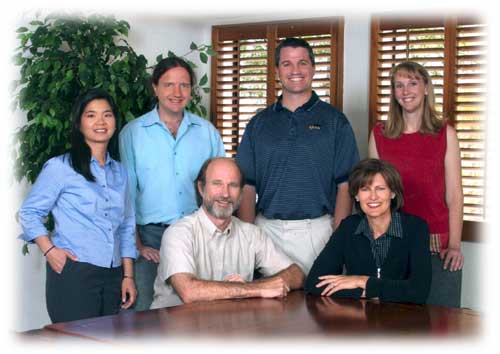
Introducing the MIL 2004 Fellows
Dr. Ann Brandt-Williams
Glendale Community College
Dr. Brian Cille
Mesa Community College
Dr. Craig Jacobsen
Mesa Community College
Nancy Johnson
GateWay Community College
Dr. Nora Amavisca Reyes
Glendale Community College
Dr. Roselyn Turner
Estrella Mountain Community College
|
Faculty Voices
As MIL Fellows participate in community, they create community. In fact, over the years Fellows have played an important role in determining the content and format of the MIL.
For example, the first MIL Fellows in 1999 met only four times a year. The Fellows felt that these meetings did not provide enough time to build community. Fellows have subsequently addressed this issue by implementing several changes to the program: monthly meetings; group conference presentations; group "kick-off" days in August and January; individual publication and presentation of classroom-based research; and participation in on-line discussions about SoTL. In addition, several former MIL Fellows get together monthly to discuss how to expand SoTL at each college. The impact of faculty voices on the MIL keep the program dynamic and adaptive, and ensures that it remains focused on the growth of SoTL in the Maricopa Community Colleges.
Continuous Evaluation
The Fellows also recognize that an effective voice is one that is involved in the process of continuous evaluation. The continued success of the MIL requires constant self assessment at the individual, group, and program levels. At the individual level, faculty report to their fellow members regarding their research progress twice a semester. These reports, though rigorous, are shared in an environment of support and trust. At the group level, all members get together during monthly meetings and regular retreats to discuss where the Fellowship is going and to explore what directions the current cohort of Fellows should take. At the program level, each cohort of Fellows spends a portion of the retreats discussing how the MIL process is working and how it can be improved for future cohorts. This evaluation process allows the group to adjust its path to current realities while always keeping its eye on the bigger goal, which is the building of SoTL.
Administrative Support
Faculty can only succeed when their goals are supported with the necessary resources. It is administrative support that makes these resources available. The administration at both the district level and that of the individual colleges have worked together to ensure that the program has the resources it needs to grow and thrive. These resources include funding for the retreats, conferences, books and materials related to SoTL, and the support of release time. Without this support, the MIL would not be able to provide faculty the opportunity to participate in the program.
The Advocate
Finally, every program needs a person who can give it continuity across time, advocate for the program's need, and publicize the program's efficacy. Without such an advocate, the program would have difficulty maintaining its focus and would have to fight yearly battles to be recognized and supported. The advocate for the MIL, Dr. Maria Harper-Marinick, provides the nurturing guidance that allows the program to thrive. Because of her role, the MIL has grown beyond just the participating cohorts; it has inspired people throughout the district to become involved in SoTL.
Conclusion
There is no one key to the success of the MIL. Rather, it depends upon the rich interaction of diverse elements. The MIL has been a strong source of the continued growth of SoTL across our district, and is an excellent model of how faculty and administrators can work together to encourage life-long learning, not just in our students, but in our faculty as well.
 MIL 2003 Fellows: Mark Burtch, Scottsdale Community College; Diane Clark, Chandler-Gilbert Community College; William Farrar, Ph.D., Estrella Mountain Community College; Dean Stover, GateWay Community College; Ly Tran-Nguyen, Ph.D., Mesa Community College; and Maureen Zimmerman, Ph.D., Mesa Community College
|